Weleda · skincare
Skin Food Original
Ultra-rich calendula and plant-oil cream for very dry skin, in continuous production since 1926.
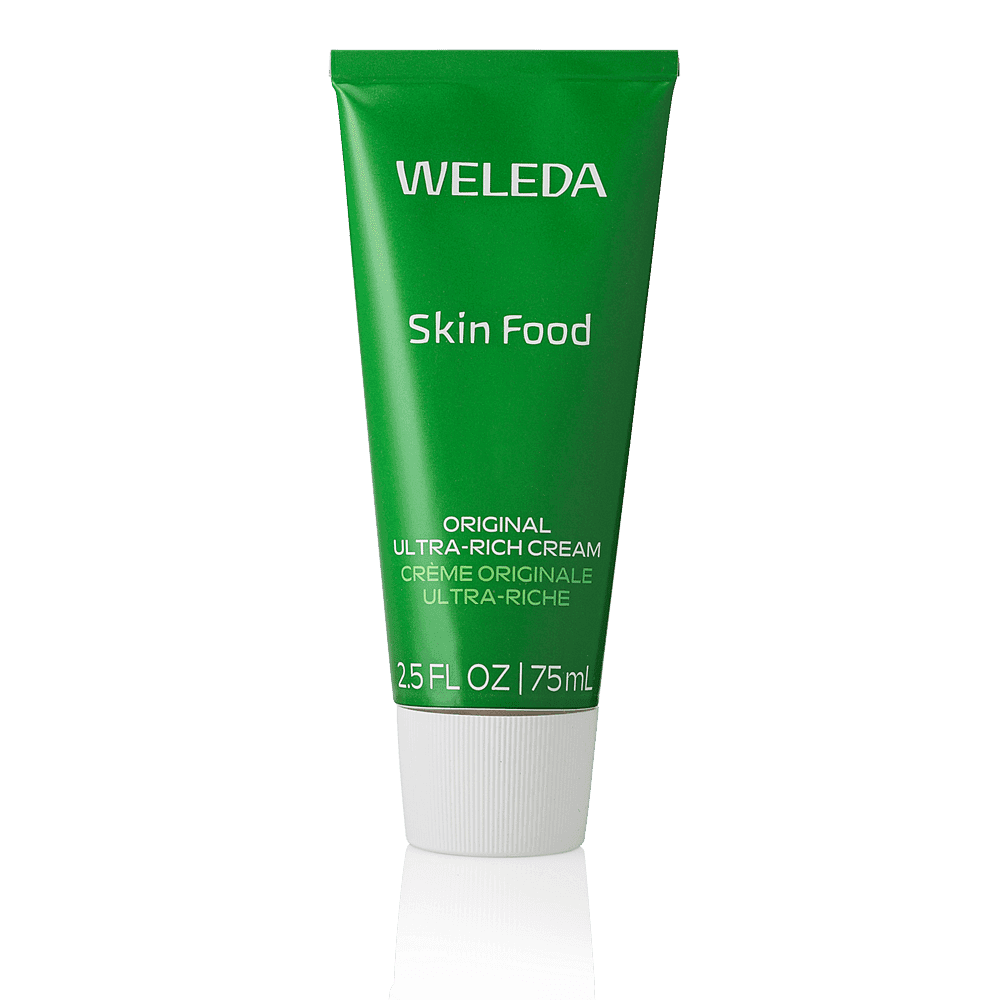
Photo: Weleda — product image from the brand's own listing.
Our take
Weleda is B Corp certified as a company, but this specific formula contains beeswax so it isn't vegan, and it carries NATRUE rather than an EU organic label we track.
Evidence score
4/4
Well evidencedHow much of this product's ethics we can actually prove — not how ethical it is. Each point is a yes-or-no check you can verify.
- This product is certifiedIt holds at least one certification issued by an independent body — not by its maker.
- Covers more than one dimensionIts certifications span at least two of nature, people and animals — not strong on one axis while silent on the rest.
- Composition publishedWe hold the full ingredient or materials list, per component where it matters, read from the maker's own listing.
- Composition mostly checkedAt least half of what it's made of has been matched against our sourced reference table.
Evidence at a glance
Three dimensions, weighted equally
2 of 3 independently certified
Certified means a third-party label backs it, with a source you can check. Stated means someone says so without one. Not found means we found nothing — not that the product fails.
What's inside
22 ingredients listed · 55% checked against our reference
The list as printed on the pack, in order — INCI runs from most to least concentrated, down to 1%. Flags cite EU law, not our opinion.
Water (Aqua)Solvent
Water. Usually the largest single component of a cream or lotion, which is why it heads most INCI lists.
Water at source ↗Helianthus Annuus (Sunflower) Seed OilEmollient
A light, widely available plant oil that is often grown in Europe, making it a lower-transport alternative to tropical oils.
Sunflower seed oil at source ↗LanolinEmollient
Wax from sheep's wool. Animal-derived, so not vegan, though obtaining it requires no harm to the animal.
Lanolin at source ↗- Prunus Amygdalus Dulcis (Sweet Almond) OilNot assessed
Beeswax (Cera Alba)Emollient and texture agent
Animal-derived, and therefore not vegan.
Beeswax at source ↗AlcoholSolvent
Dissolves fragrance and aids preservation. In an eau de parfum it is usually the bulk of the formula.
Alcohol (ethanol) at source ↗- Polyglyceryl-3 PolyricinoleateNot assessed
GlycerinHumectant
Draws water into the skin's surface layers. May be plant- or animal-derived; certified organic and vegan products use the plant route.
Glycerin at source ↗LimoneneFragrance component
Declarable fragrance allergen: must be named on the label above 0.001% in leave-on or 0.01% in rinse-off products. Commonly occurs naturally in essential oils. Occurs in citrus peel oils; can oxidise on contact with air, which is what raises its sensitising potential.
Limonene at source ↗- Viola Tricolor ExtractNot assessed
- Hydrolyzed BeeswaxNot assessed
- Sorbitan OlivateNot assessed
- Rosmarinus Officinalis (Rosemary) Leaf ExtractNot assessed
- Chamomilla Recutita (Matricaria) Flower ExtractNot assessed
- Calendula Officinalis Flower ExtractNot assessed
- ArginineNot assessed
- Zinc SulfateNot assessed
Fragrance (Parfum)Perfuming
An umbrella term: the individual components need not be listed, except for the 80 allergens that must be named separately. A short INCI list with PARFUM on it is less transparent than it appears.
Fragrance at source ↗LinaloolFragrance component
Declarable fragrance allergen: must be named on the label above 0.001% in leave-on or 0.01% in rinse-off products. Commonly occurs naturally in essential oils. Found in lavender, rosewood and coriander oils.
Linalool at source ↗GeraniolFragrance component
Declarable fragrance allergen: must be named on the label above 0.001% in leave-on or 0.01% in rinse-off products. Commonly occurs naturally in essential oils. Found in rose, palmarosa and citronella oils.
Geraniol at source ↗CitralFragrance component
Declarable fragrance allergen: must be named on the label above 0.001% in leave-on or 0.01% in rinse-off products. Commonly occurs naturally in essential oils. Found in lemongrass, lemon and verbena oils.
Citral at source ↗CoumarinFragrance component
Declarable fragrance allergen: must be named on the label above 0.001% in leave-on or 0.01% in rinse-off products. Commonly occurs naturally in essential oils. Found in tonka bean and sweet woodruff; also used as a fragrance in its own right.
Coumarin at source ↗
Open any assessed entry to read what it does and why, with the source it came from. “Not assessed” means it isn't in our reference table yet — not that it's been cleared. We only mark what we can source. This list was read from Weleda ↗, not reconstructed.
Why it qualifies
The verifiable part — every certification this product holds, and what each one actually guarantees.
B Corp
B LabIndependently verified social and environmental performance across the whole company, not a single product.
About Weleda
Anthroposophic natural care from biodynamic gardens; a certified B Corp.
Company-level certification
Held by the company, not by this product. The same maker can ship a certified line and an uncertified one, so this is context — it does not count towards the score above.
Outbound links may be affiliate links. We never hold stock or process payments. Price bands are indicative and not tracked live — check the merchant for the current figure.