Pai Skincare · skincare
The Anthemis™ Moisturiser
Calming day cream for sensitive skin with organic chamomile, rosehip, apricot and jojoba oils.
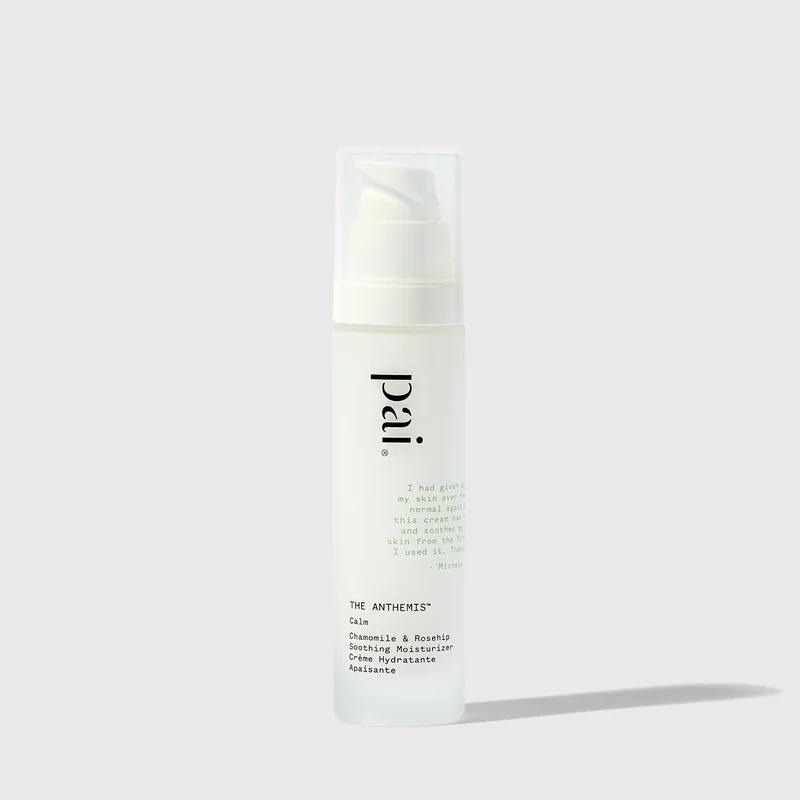
Photo: Pai Skincare — product image from the brand's own listing.
Our take
A calming day cream for sensitive skin, COSMOS Organic via the Soil Association and Leaping Bunny certified. Priced in pounds only, so no price is set.
Evidence score
3/4
Well evidencedHow much of this product's ethics we can actually prove — not how ethical it is. Each point is a yes-or-no check you can verify.
- This product is certifiedIt holds at least one certification issued by an independent body — not by its maker.
- Covers more than one dimensionIts certifications span at least two of nature, people and animals — not strong on one axis while silent on the rest.
- Composition publishedWe hold the full ingredient or materials list, per component where it matters, read from the maker's own listing.
- Composition mostly checkedNot metAt least half of what it's made of has been matched against our sourced reference table.
Evidence at a glance
Three dimensions, weighted equally
2 of 3 independently certified
Certified means a third-party label backs it, with a source you can check. Stated means someone says so without one. Not found means we found nothing — not that the product fails.
- NatureCertifiedCOSMOS Organic
- PeopleNot foundNothing on record
- AnimalsCertifiedLeaping Bunny
What's inside
34 ingredients listed · 41% checked against our reference
The list as printed on the pack, in order — INCI runs from most to least concentrated, down to 1%. Flags cite EU law, not our opinion.
Aqua (water)Solvent
Water. Usually the largest single component of a cream or lotion, which is why it heads most INCI lists.
Water at source ↗- prunus armeniaca kernel oil (apricot)organicNot assessed
- simmondsia chinensis seed oil (jojoba)organicNot assessed
- carthamus tinctorius seed oil (safflower)organicNot assessed
cetearyl alcoholEmulsifier and emollient
A fatty alcohol derived from plant oils, not a drying solvent alcohol despite the name. It thickens creams and holds oil and water together.
Cetearyl alcohol at source ↗- rosa canina seed extract (rosehip)organicNot assessed
- rose flower oil/extractNot assessed
glycerinmade using organic and non-organic ingredients (page legend)Humectant
Draws water into the skin's surface layers. May be plant- or animal-derived; certified organic and vegan products use the plant route.
Glycerin at source ↗- butyrospermum parkii butter (shea butter)organicNot assessed
- cetearyl glucosideNot assessed
- inulinNot assessed
- triethyl citrateNot assessed
- caprylyl glycolNot assessed
- lactic acidNot assessed
- sodium stearoyl glutamateNot assessed
parfumPerfuming
An umbrella term: the individual components need not be listed, except for the 80 allergens that must be named separately. A short INCI list with PARFUM on it is less transparent than it appears.
Fragrance at source ↗- chamomilla recutita flower extract (chamomile)organicNot assessed
- tocopherol (vitamin e)organicNot assessed
- cladonia stellaris extract (lichen)Not assessed
- fructoseNot assessed
- sodium phytateNot assessed
- cladonia rangiferina extract (lichen)Not assessed
- rosmarinus officinalis leaf extract (rosemary)organicNot assessed
- pelargonium graveolens oilNot assessed
citronellolFragrance component
Declarable fragrance allergen: must be named on the label above 0.001% in leave-on or 0.01% in rinse-off products. Commonly occurs naturally in essential oils. Found in rose and geranium oils.
Citronellol at source ↗geraniolFragrance component
Declarable fragrance allergen: must be named on the label above 0.001% in leave-on or 0.01% in rinse-off products. Commonly occurs naturally in essential oils. Found in rose, palmarosa and citronella oils.
Geraniol at source ↗lavandula oil/extractFragrance component
Declarable fragrance allergen: must be named on the label above 0.001% in leave-on or 0.01% in rinse-off products. Commonly occurs naturally in essential oils. Annex III entry 360: Lavandula angustifolia, hybrida and intermedia oils and extracts are declared under this collective name.
Lavender oil / extract at source ↗linaloolFragrance component
Declarable fragrance allergen: must be named on the label above 0.001% in leave-on or 0.01% in rinse-off products. Commonly occurs naturally in essential oils. Found in lavender, rosewood and coriander oils.
Linalool at source ↗limoneneFragrance component
Declarable fragrance allergen: must be named on the label above 0.001% in leave-on or 0.01% in rinse-off products. Commonly occurs naturally in essential oils. Occurs in citrus peel oils; can oxidise on contact with air, which is what raises its sensitising potential.
Limonene at source ↗linalyl acetateFragrance component
Declarable fragrance allergen: must be named on the label above 0.001% in leave-on or 0.01% in rinse-off products. Commonly occurs naturally in essential oils. Annex III entry 337. Found in lavender, bergamot and clary sage oils.
Linalyl acetate at source ↗beta-caryophylleneFragrance component
Declarable fragrance allergen: must be named on the label above 0.001% in leave-on or 0.01% in rinse-off products. Commonly occurs naturally in essential oils. Annex III entry 332. Found in clove, black pepper and cannabis oils.
Beta-caryophyllene at source ↗pineneFragrance component
Declarable fragrance allergen: must be named on the label above 0.001% in leave-on or 0.01% in rinse-off products. Commonly occurs naturally in essential oils. Annex III entry 371 (alpha- and beta-pinene together). Found in pine and conifer oils; as a monoterpene it is also subject to the peroxide-value limit of entry 130.
Pinene at source ↗terpineolFragrance component
Declarable fragrance allergen: must be named on the label above 0.001% in leave-on or 0.01% in rinse-off products. Commonly occurs naturally in essential oils. Annex III entry 343 (alpha-, beta- and gamma-terpineol together). Found in pine, lavender and cajeput oils.
Terpineol at source ↗citralFragrance component
Declarable fragrance allergen: must be named on the label above 0.001% in leave-on or 0.01% in rinse-off products. Commonly occurs naturally in essential oils. Found in lemongrass, lemon and verbena oils.
Citral at source ↗
Open any assessed entry to read what it does and why, with the source it came from. “Not assessed” means it isn't in our reference table yet — not that it's been cleared. We only mark what we can source. This list was read from Pai Skincare ↗, not reconstructed.
Other claims
Stated by the maker rather than certified by a third party — each one linked to where it's stated, so you can weigh it yourself.
Certification statement
100% Natural. COSMOS Organic certified. Vegan. Cruelty-free.
Where this is stated ↗Certifications (FAQ)
The Anthemis is COSMOS Organic certified by the Soil Association, Leaping Bunny certified cruelty-free, and registered vegan.
Where this is stated ↗
Why it qualifies
The verifiable part — every certification this product holds, and what each one actually guarantees.
COSMOS Organic
COSMOS-standard AISBLOrganic-certified ingredients and environmentally sound processing, audited across the supply chain.
Leaping Bunny
Cruelty Free InternationalNo animal testing at any stage, verified by independent audit against a fixed cut-off date.
About Pai Skincare
London skincare for sensitive skin, formulated and made in its own laboratory, certified natural.
paiskincare.com ↗Outbound links may be affiliate links. We never hold stock or process payments. Price bands are indicative and not tracked live — check the merchant for the current figure.