Dr. Hauschka · body
Huile de Soin Moor Lavande
Warming body oil with moor (peat) extract, lavender, olive oil and shea butter, 75 ml.
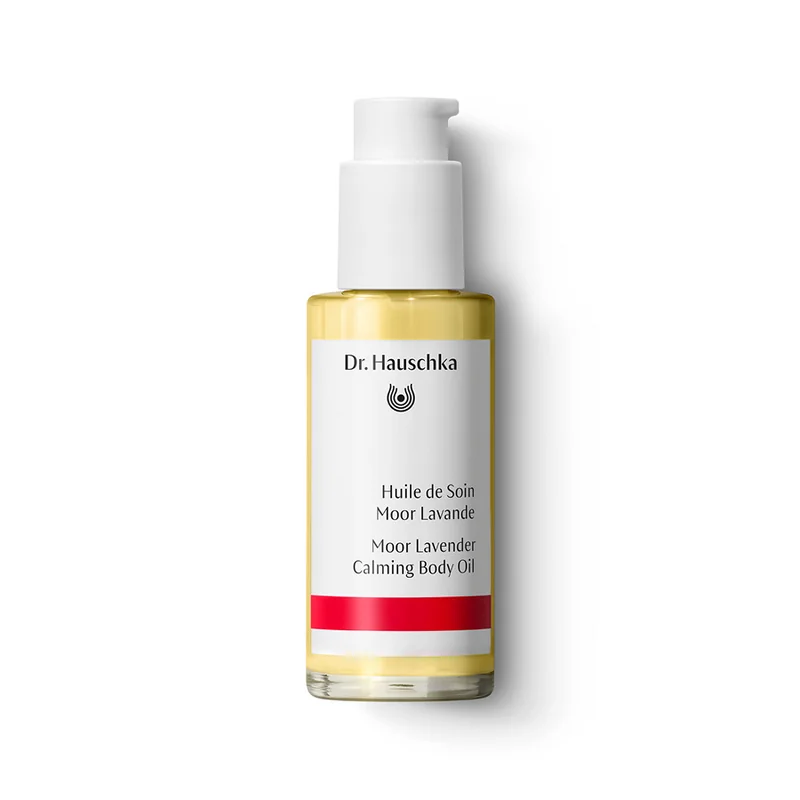
Photo: Dr. Hauschka — product image from the brand's own listing.
Our take
A warming body oil certified NATRUE, with a PETA vegan badge. Neither is a label in this directory yet, so it shows no certification here.
Evidence score
2/4
Partly evidencedHow much of this product's ethics we can actually prove — not how ethical it is. Each point is a yes-or-no check you can verify.
- This product is certifiedNot metIt holds at least one certification issued by an independent body — not by its maker.
- Covers more than one dimensionNot metIts certifications span at least two of nature, people and animals — not strong on one axis while silent on the rest.
- Composition publishedWe hold the full ingredient or materials list, per component where it matters, read from the maker's own listing.
- Composition mostly checkedAt least half of what it's made of has been matched against our sourced reference table.
Evidence at a glance
Three dimensions, weighted equally
0 of 3 independently certified
Certified means a third-party label backs it, with a source you can check. Stated means someone says so without one. Not found means we found nothing — not that the product fails.
- NatureStated onlyeditorial assessment — no certification found
- PeopleNot foundNothing on record
- AnimalsStated onlyvegan, editorial assessment — no certification found
What's inside
26 ingredients listed · 77% checked against our reference
The list as printed on the pack, in order — INCI runs from most to least concentrated, down to 1%. Flags cite EU law, not our opinion.
- Olea Europaea Fruit OilNot assessed
AquaSolvent
Water. Usually the largest single component of a cream or lotion, which is why it heads most INCI lists.
Water at source ↗Butyrospermum Parkii ButterEmollient
Fat pressed from shea nuts, largely harvested and processed by women's cooperatives in West Africa — one of the few cosmetic ingredients with an established fair-trade supply chain.
Shea butter at source ↗Lavandula Oil/ExtractFragrance component
Declarable fragrance allergen: must be named on the label above 0.001% in leave-on or 0.01% in rinse-off products. Commonly occurs naturally in essential oils. Annex III entry 360: Lavandula angustifolia, hybrida and intermedia oils and extracts are declared under this collective name.
Lavender oil / extract at source ↗- Peat Moss ExtractNot assessed
- Sucrose PolystearateNot assessed
- Hydrogenated Jojoba OilNot assessed
Parfumnaturally presentPerfuming
An umbrella term: the individual components need not be listed, except for the 80 allergens that must be named separately. A short INCI list with PARFUM on it is less transparent than it appears.
Fragrance at source ↗- Equisetum Arvense ExtractNot assessed
- Aesculus Hippocastanum Seed ExtractNot assessed
AlcoholSolvent
Dissolves fragrance and aids preservation. In an eau de parfum it is usually the bulk of the formula.
Alcohol (ethanol) at source ↗Helianthus Annuus Seed OilEmollient
A light, widely available plant oil that is often grown in Europe, making it a lower-transport alternative to tropical oils.
Sunflower seed oil at source ↗Pelargonium Graveolens Flower OilFragrance component
Declarable fragrance allergen: must be named on the label above 0.001% in leave-on or 0.01% in rinse-off products. Commonly occurs naturally in essential oils. Annex III entry 364. The whole essential oil is declarable.
Geranium oil at source ↗Linaloolnaturally presentFragrance component
Declarable fragrance allergen: must be named on the label above 0.001% in leave-on or 0.01% in rinse-off products. Commonly occurs naturally in essential oils. Found in lavender, rosewood and coriander oils.
Linalool at source ↗Linalyl Acetatenaturally presentFragrance component
Declarable fragrance allergen: must be named on the label above 0.001% in leave-on or 0.01% in rinse-off products. Commonly occurs naturally in essential oils. Annex III entry 337. Found in lavender, bergamot and clary sage oils.
Linalyl acetate at source ↗Camphornaturally presentFragrance component
Declarable fragrance allergen: must be named on the label above 0.001% in leave-on or 0.01% in rinse-off products. Commonly occurs naturally in essential oils. Annex III entry 331. Found in rosemary, lavender and camphor-tree oils.
Camphor at source ↗Citronellolnaturally presentFragrance component
Declarable fragrance allergen: must be named on the label above 0.001% in leave-on or 0.01% in rinse-off products. Commonly occurs naturally in essential oils. Found in rose and geranium oils.
Citronellol at source ↗Limonenenaturally presentFragrance component
Declarable fragrance allergen: must be named on the label above 0.001% in leave-on or 0.01% in rinse-off products. Commonly occurs naturally in essential oils. Occurs in citrus peel oils; can oxidise on contact with air, which is what raises its sensitising potential.
Limonene at source ↗Pinenenaturally presentFragrance component
Declarable fragrance allergen: must be named on the label above 0.001% in leave-on or 0.01% in rinse-off products. Commonly occurs naturally in essential oils. Annex III entry 371 (alpha- and beta-pinene together). Found in pine and conifer oils; as a monoterpene it is also subject to the peroxide-value limit of entry 130.
Pinene at source ↗Terpineolnaturally presentFragrance component
Declarable fragrance allergen: must be named on the label above 0.001% in leave-on or 0.01% in rinse-off products. Commonly occurs naturally in essential oils. Annex III entry 343 (alpha-, beta- and gamma-terpineol together). Found in pine, lavender and cajeput oils.
Terpineol at source ↗Geraniolnaturally presentFragrance component
Declarable fragrance allergen: must be named on the label above 0.001% in leave-on or 0.01% in rinse-off products. Commonly occurs naturally in essential oils. Found in rose, palmarosa and citronella oils.
Geraniol at source ↗Beta-Caryophyllenenaturally presentFragrance component
Declarable fragrance allergen: must be named on the label above 0.001% in leave-on or 0.01% in rinse-off products. Commonly occurs naturally in essential oils. Annex III entry 332. Found in clove, black pepper and cannabis oils.
Beta-caryophyllene at source ↗Coumarinnaturally presentFragrance component
Declarable fragrance allergen: must be named on the label above 0.001% in leave-on or 0.01% in rinse-off products. Commonly occurs naturally in essential oils. Found in tonka bean and sweet woodruff; also used as a fragrance in its own right.
Coumarin at source ↗Citralnaturally presentFragrance component
Declarable fragrance allergen: must be named on the label above 0.001% in leave-on or 0.01% in rinse-off products. Commonly occurs naturally in essential oils. Found in lemongrass, lemon and verbena oils.
Citral at source ↗Alpha-Terpinenenaturally presentFragrance component
Declarable fragrance allergen: must be named on the label above 0.001% in leave-on or 0.01% in rinse-off products. Commonly occurs naturally in essential oils. Annex III entry 131. Found in tea tree and cardamom oils; the peroxide value must stay below 10 mmol/L.
Alpha-terpinene at source ↗Terpinolenenaturally presentFragrance component
Declarable fragrance allergen: must be named on the label above 0.001% in leave-on or 0.01% in rinse-off products. Commonly occurs naturally in essential oils. Annex III entry 133. Found in tea tree and citrus oils; the peroxide value must stay below 10 mmol/L.
Terpinolene at source ↗
Open any assessed entry to read what it does and why, with the source it came from. “Not assessed” means it isn't in our reference table yet — not that it's been cleared. We only mark what we can source. This list was read from Dr. Hauschka ↗, not reconstructed.
Other claims
Stated by the maker rather than certified by a third party — each one linked to where it's stated, so you can weigh it yourself.
Certification statement
100% cosmétique naturelle , certifiée par NATRUE (certificat)
Where this is stated ↗Badge
Certifié par PETA & vegan
Where this is stated ↗
Why it qualifies
The verifiable part — every certification this product holds, and what each one actually guarantees.
No formal certifications recorded — included on editorial grounds only. Treat with more caution than a labelled product.
About Dr. Hauschka
Certified natural and organic cosmetics built on medicinal plants, for face, body and make-up.
drhauschka.fr ↗Outbound links may be affiliate links. We never hold stock or process payments. Price bands are indicative and not tracked live — check the merchant for the current figure.