Acorelle · fragrance
Eau de Parfum Bio — Tendre Patchouli
Amber-woody eau de parfum built on organic patchouli, cistus and cedar essential oils.
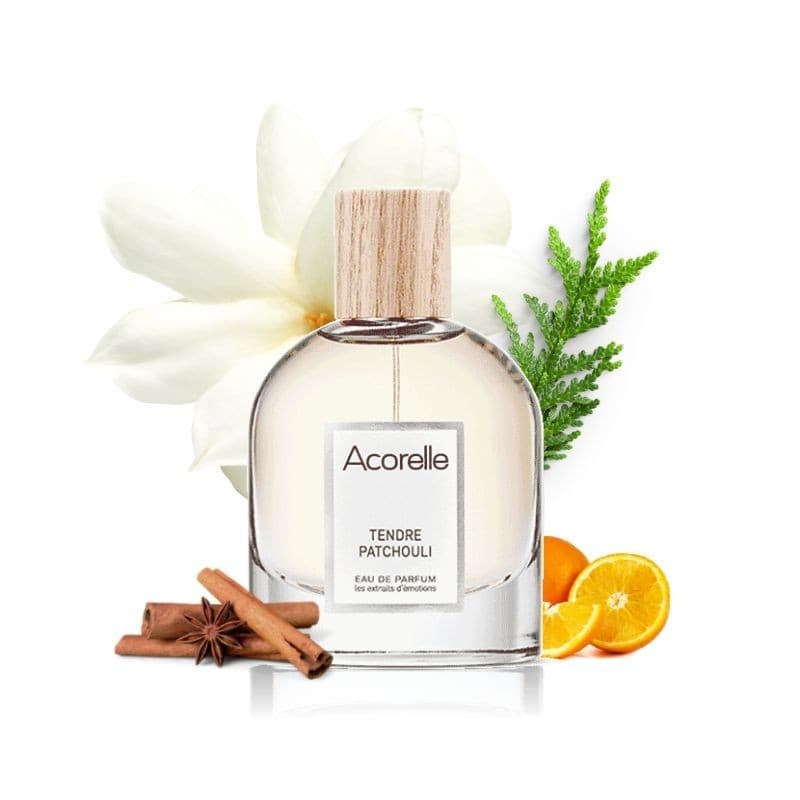
Photo: Acorelle — product image from the brand's own listing.
Our take
Cosmébio-certified and vegan, made in Lot-et-Garonne; organic perfumery has a more restricted ingredient palette than conventional fragrance, and the accord reads simpler as a result.
Evidence score
4/4
Well evidencedHow much of this product's ethics we can actually prove — not how ethical it is. Each point is a yes-or-no check you can verify.
- This product is certifiedIt holds at least one certification issued by an independent body — not by its maker.
- Covers more than one dimensionIts certifications span at least two of nature, people and animals — not strong on one axis while silent on the rest.
- Composition publishedWe hold the full ingredient or materials list, per component where it matters, read from the maker's own listing.
- Composition mostly checkedAt least half of what it's made of has been matched against our sourced reference table.
Evidence at a glance
Three dimensions, weighted equally
2 of 3 independently certified
Certified means a third-party label backs it, with a source you can check. Stated means someone says so without one. Not found means we found nothing — not that the product fails.
What's inside
18 ingredients listed · 94% checked against our reference
The list as printed on the pack, in order — INCI runs from most to least concentrated, down to 1%. Flags cite EU law, not our opinion.
ALCOHOLfrom organicSolvent
Dissolves fragrance and aids preservation. In an eau de parfum it is usually the bulk of the formula.
Alcohol (ethanol) at source ↗- HAMAMELIS VIRGINIANA (WITCH HAZEL) LEAF WATERorganicNot assessed
PARFUM (FRAGRANCE)Perfuming
An umbrella term: the individual components need not be listed, except for the 80 allergens that must be named separately. A short INCI list with PARFUM on it is less transparent than it appears.
Fragrance at source ↗LINALOOLFragrance component
Declarable fragrance allergen: must be named on the label above 0.001% in leave-on or 0.01% in rinse-off products. Commonly occurs naturally in essential oils. Found in lavender, rosewood and coriander oils.
Linalool at source ↗LIMONENEFragrance component
Declarable fragrance allergen: must be named on the label above 0.001% in leave-on or 0.01% in rinse-off products. Commonly occurs naturally in essential oils. Occurs in citrus peel oils; can oxidise on contact with air, which is what raises its sensitising potential.
Limonene at source ↗BENZYL SALICYLATEFragrance component
Declarable fragrance allergen: must be named on the label above 0.001% in leave-on or 0.01% in rinse-off products. Commonly occurs naturally in essential oils. Used as a fragrance and UV absorber.
Benzyl salicylate at source ↗CINNAMYL ALCOHOLFragrance component
Declarable fragrance allergen: must be named on the label above 0.001% in leave-on or 0.01% in rinse-off products. Commonly occurs naturally in essential oils. Found in storax and Peru balsam; also occurs in cinnamon.
Cinnamyl alcohol at source ↗HEXYL CINNAMALFragrance component
Declarable fragrance allergen: must be named on the label above 0.001% in leave-on or 0.01% in rinse-off products. Commonly occurs naturally in essential oils. A jasmine-note fragrance material, occurring naturally in chamomile oil.
Hexyl cinnamal at source ↗BENZYL BENZOATEFragrance component
Declarable fragrance allergen: must be named on the label above 0.001% in leave-on or 0.01% in rinse-off products. Commonly occurs naturally in essential oils. Found in Peru balsam and ylang-ylang; also used as a fixative and solvent for other fragrance materials.
Benzyl benzoate at source ↗BENZYL CINNAMATEFragrance component
Declarable fragrance allergen: must be named on the label above 0.001% in leave-on or 0.01% in rinse-off products. Commonly occurs naturally in essential oils. Found in Peru and tolu balsams; a balsamic fixative note.
Benzyl cinnamate at source ↗COUMARINFragrance component
Declarable fragrance allergen: must be named on the label above 0.001% in leave-on or 0.01% in rinse-off products. Commonly occurs naturally in essential oils. Found in tonka bean and sweet woodruff; also used as a fragrance in its own right.
Coumarin at source ↗EUGENOLFragrance component
Declarable fragrance allergen: must be named on the label above 0.001% in leave-on or 0.01% in rinse-off products. Commonly occurs naturally in essential oils. Found in clove and cinnamon leaf oils.
Eugenol at source ↗CINNAMALFragrance component
Declarable fragrance allergen: must be named on the label above 0.001% in leave-on or 0.01% in rinse-off products. Commonly occurs naturally in essential oils. The compound that gives cinnamon bark oil its scent and taste.
Cinnamaldehyde at source ↗CITRONELLOLFragrance component
Declarable fragrance allergen: must be named on the label above 0.001% in leave-on or 0.01% in rinse-off products. Commonly occurs naturally in essential oils. Found in rose and geranium oils.
Citronellol at source ↗BENZYL ALCOHOLPreservative and fragrance component
Dual-listed: a preservative permitted to 1% under Annex V, and a declarable fragrance allergen under Annex III when used for scent.
Benzyl alcohol at source ↗FARNESOLFragrance component
Declarable fragrance allergen: must be named on the label above 0.001% in leave-on or 0.01% in rinse-off products. Commonly occurs naturally in essential oils. Found in neroli and citronella oils; also used as a deodorant agent.
Farnesol at source ↗GERANIOLFragrance component
Declarable fragrance allergen: must be named on the label above 0.001% in leave-on or 0.01% in rinse-off products. Commonly occurs naturally in essential oils. Found in rose, palmarosa and citronella oils.
Geraniol at source ↗CITRALFragrance component
Declarable fragrance allergen: must be named on the label above 0.001% in leave-on or 0.01% in rinse-off products. Commonly occurs naturally in essential oils. Found in lemongrass, lemon and verbena oils.
Citral at source ↗
Open any assessed entry to read what it does and why, with the source it came from. “Not assessed” means it isn't in our reference table yet — not that it's been cleared. We only mark what we can source. This list was read from Acorelle ↗, not reconstructed.
Why it qualifies
The verifiable part — every certification this product holds, and what each one actually guarantees.
Cosmébio
Association CosmébioFrench organic-cosmetics charter: minimum organic content, no petrochemicals, transparent sourcing.
About Acorelle
Organic fragrance and care from Lot-et-Garonne, proving certified perfume can still work.
Company-level certification
Held by the company, not by this product. The same maker can ship a certified line and an uncertified one, so this is context — it does not count towards the score above.
Outbound links may be affiliate links. We never hold stock or process payments. Price bands are indicative and not tracked live — check the merchant for the current figure.