Absolution · skincare
Le Sérum Anti-Soif
Lightweight, oil-free hydrating and antioxidant daily face serum.
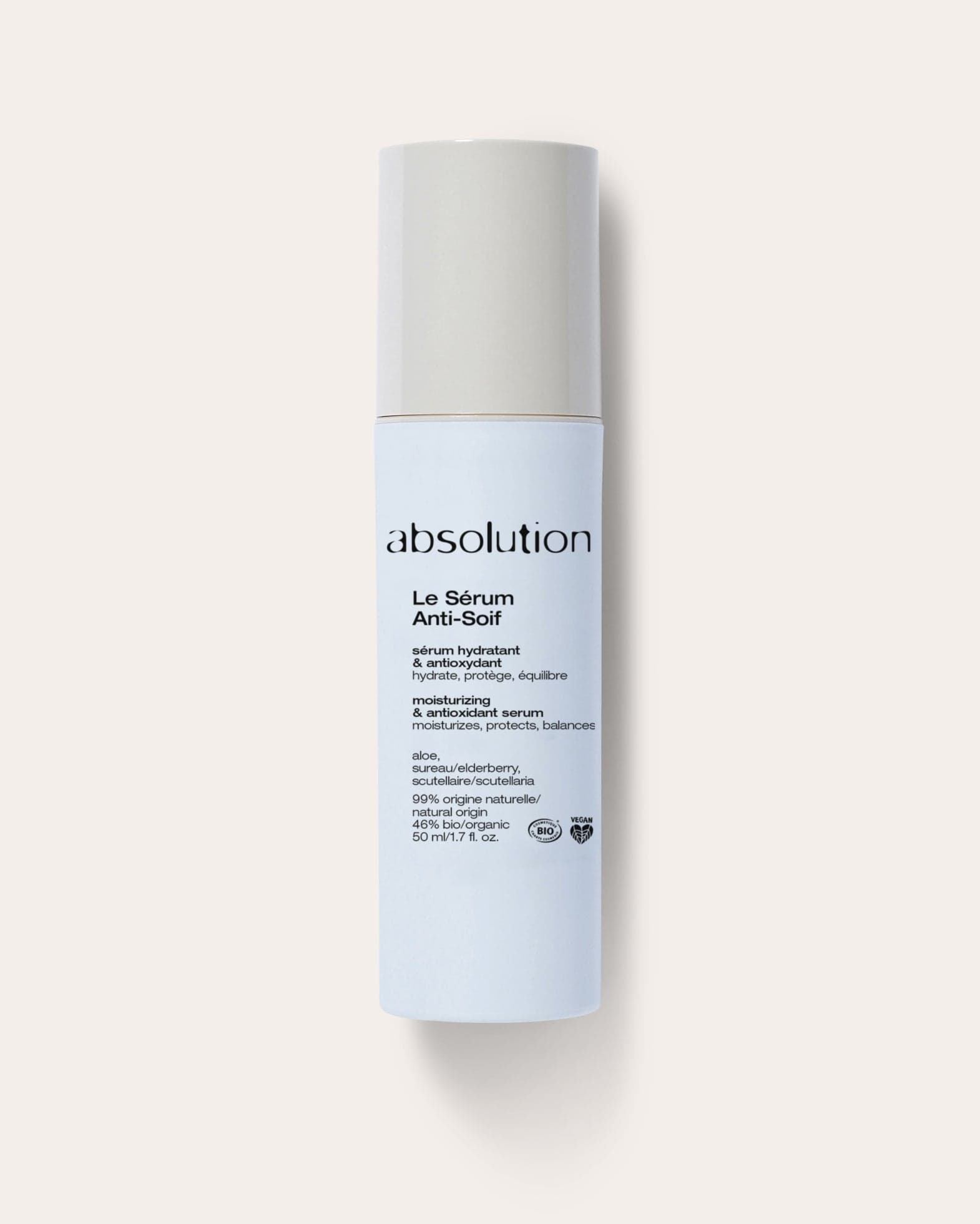
Photo: Absolution — product image from the brand's own listing.
Our take
Ecocert/Cosmébio-certified and explicitly not tested on animals; Absolution makes no vegan claim, so we're not asserting one either.
Evidence score
3/4
Well evidencedHow much of this product's ethics we can actually prove — not how ethical it is. Each point is a yes-or-no check you can verify.
- This product is certifiedIt holds at least one certification issued by an independent body — not by its maker.
- Covers more than one dimensionIts certifications span at least two of nature, people and animals — not strong on one axis while silent on the rest.
- Composition publishedWe hold the full ingredient or materials list, per component where it matters, read from the maker's own listing.
- Composition mostly checkedNot metAt least half of what it's made of has been matched against our sourced reference table.
Evidence at a glance
Three dimensions, weighted equally
2 of 3 independently certified
Certified means a third-party label backs it, with a source you can check. Stated means someone says so without one. Not found means we found nothing — not that the product fails.
What's inside
55 ingredients listed · 49% checked against our reference
The list as printed on the pack, in order — INCI runs from most to least concentrated, down to 1%. Flags cite EU law, not our opinion.
AQUA (WATER)Solvent
Water. Usually the largest single component of a cream or lotion, which is why it heads most INCI lists.
Water at source ↗- MENTHA PIPERITA (PEPPERMINT) LEAF WATERorganicNot assessed
- SALVIA OFFICINALIS (SAGE) FLOWER/LEAF/STEM WATERorganicNot assessed
GLYCERINHumectant
Draws water into the skin's surface layers. May be plant- or animal-derived; certified organic and vegan products use the plant route.
Glycerin at source ↗ALCOHOLfrom organicSolvent
Dissolves fragrance and aids preservation. In an eau de parfum it is usually the bulk of the formula.
Alcohol (ethanol) at source ↗- ORBIGNYA OLEIFERA SEED OILorganicNot assessed
- LIPPIA CITRIODORA LEAF WATERorganicNot assessed
- SAMBUCUS NIGRA FLOWER EXTRACTorganicNot assessed
ALOE BARBADENSIS LEAF JUICE POWDERorganicSkin conditioning
Juice pressed from aloe leaves. Frequently listed high for marketing effect while present at low concentration — its position in the list matters more than its presence.
Aloe vera leaf juice at source ↗- CARTHAMUS TINCTORIUS (SAFFLOWER) SEED OILorganicNot assessed
- CORYLUS AVELLANA (HAZELNUT) SEED OILorganicNot assessed
- VACCINIUM MYRTILLUS FRUIT EXTRACTNot assessed
- SCUTELLARIA ALPINA FLOWER/LEAF/STEM EXTRACTorganicNot assessed
- SACCHARUM OFFICINARUM (SUGARCANE) EXTRACTNot assessed
- ECHINACEA PURPUREA FLOWER/LEAF/STEM EXTRACTorganicNot assessed
- VIOLA TRICOLOR EXTRACTorganicNot assessed
- MIMOSA TENUIFLORA BARK EXTRACTNot assessed
- ACER SACCHARUM (SUGAR MAPLE) EXTRACTNot assessed
- TREMELLA FUCIFORMIS POLYSACCHARIDENot assessed
- ZINC PCANot assessed
- SCLEROTIUM GUMNot assessed
BENZYL ALCOHOLPreservative and fragrance component
Dual-listed: a preservative permitted to 1% under Annex V, and a declarable fragrance allergen under Annex III when used for scent.
Benzyl alcohol at source ↗- ORYZA SATIVA (RICE) HULL POWDERNot assessed
XANTHAN GUMThickener and stabiliser
Polysaccharide produced by bacterial fermentation of sugars. Thickens water-based formulas and keeps them from separating; accepted under the COSMOS organic standard.
Xanthan gum at source ↗- MALTODEXTRINNot assessed
- LEVULINIC ACIDNot assessed
- SODIUM LEVULINATENot assessed
CITRUS LIMON (LEMON) PEEL OILorganicFragrance component
Declarable fragrance allergen: must be named on the label above 0.001% in leave-on or 0.01% in rinse-off products. Commonly occurs naturally in essential oils. Annex III entry 353. The whole essential oil is declarable, over and above the limonene and citral it contains.
Lemon peel oil at source ↗- MAGNESIUM PCANot assessed
SODIUM HYDROXIDEpH adjuster
Caustic soda, listed in Annex III with concentration limits. Used to neutralise a formula to skin-compatible pH; it is consumed in that reaction rather than remaining as such.
Sodium hydroxide at source ↗- LITSEA CUBEBA FRUIT OILorganicNot assessed
- THYMUS ZYGIS FLOWER OILorganicNot assessed
DEHYDROACETIC ACIDPreservative
Permitted preservative under Annex V within stated concentration limits.
Dehydroacetic acid at source ↗- BIOSACCHARIDE GUM-1Not assessed
- CITRUS AURANTIUM DULCIS (ORANGE) FRUIT EXTRACTNot assessed
- CITRUS LIMON (LEMON) FRUIT EXTRACTNot assessed
TOCOPHEROLAntioxidant
Protects oils in the formula from going rancid. Commonly added to plant-oil-heavy products for shelf life.
Vitamin E at source ↗PELARGONIUM GRAVEOLENS FLOWER OILorganicFragrance component
Declarable fragrance allergen: must be named on the label above 0.001% in leave-on or 0.01% in rinse-off products. Commonly occurs naturally in essential oils. Annex III entry 364. The whole essential oil is declarable.
Geranium oil at source ↗- PIPER NIGRUM (PEPPER) FRUIT OILorganicNot assessed
MICAColourant and shimmer
Mineral pigment permitted under Annex IV. Its supply chain carries a documented child-labour risk in parts of India, so traceable sourcing — not the ingredient itself — is what matters here.
Mica at source ↗CI 77491 (IRON OXIDES)Colourant
Mineral pigment on the Annex IV list of colourants permitted in cosmetics.
Iron oxide red at source ↗CITRIC ACIDpH adjuster
Adjusts a formula towards the skin's slightly acidic pH. Present in small amounts near the end of most INCI lists.
Citric acid at source ↗LIMONENEnaturally presentFragrance component
Declarable fragrance allergen: must be named on the label above 0.001% in leave-on or 0.01% in rinse-off products. Commonly occurs naturally in essential oils. Occurs in citrus peel oils; can oxidise on contact with air, which is what raises its sensitising potential.
Limonene at source ↗CITRALnaturally presentFragrance component
Declarable fragrance allergen: must be named on the label above 0.001% in leave-on or 0.01% in rinse-off products. Commonly occurs naturally in essential oils. Found in lemongrass, lemon and verbena oils.
Citral at source ↗PINENEnaturally presentFragrance component
Declarable fragrance allergen: must be named on the label above 0.001% in leave-on or 0.01% in rinse-off products. Commonly occurs naturally in essential oils. Annex III entry 371 (alpha- and beta-pinene together). Found in pine and conifer oils; as a monoterpene it is also subject to the peroxide-value limit of entry 130.
Pinene at source ↗LINALOOLnaturally presentFragrance component
Declarable fragrance allergen: must be named on the label above 0.001% in leave-on or 0.01% in rinse-off products. Commonly occurs naturally in essential oils. Found in lavender, rosewood and coriander oils.
Linalool at source ↗BETA-CARYOPHYLLENEnaturally presentFragrance component
Declarable fragrance allergen: must be named on the label above 0.001% in leave-on or 0.01% in rinse-off products. Commonly occurs naturally in essential oils. Annex III entry 332. Found in clove, black pepper and cannabis oils.
Beta-caryophyllene at source ↗CITRONELLOLnaturally presentFragrance component
Declarable fragrance allergen: must be named on the label above 0.001% in leave-on or 0.01% in rinse-off products. Commonly occurs naturally in essential oils. Found in rose and geranium oils.
Citronellol at source ↗GERANIOLnaturally presentFragrance component
Declarable fragrance allergen: must be named on the label above 0.001% in leave-on or 0.01% in rinse-off products. Commonly occurs naturally in essential oils. Found in rose, palmarosa and citronella oils.
Geraniol at source ↗MENTHOLnaturally presentFragrance component
Declarable fragrance allergen: must be named on the label above 0.001% in leave-on or 0.01% in rinse-off products. Commonly occurs naturally in essential oils. Annex III entry 338 (all isomers). Found in mint oils; also used for its cooling effect.
Menthol at source ↗ALPHA-TERPINENEnaturally presentFragrance component
Declarable fragrance allergen: must be named on the label above 0.001% in leave-on or 0.01% in rinse-off products. Commonly occurs naturally in essential oils. Annex III entry 131. Found in tea tree and cardamom oils; the peroxide value must stay below 10 mmol/L.
Alpha-terpinene at source ↗CAMPHORnaturally presentFragrance component
Declarable fragrance allergen: must be named on the label above 0.001% in leave-on or 0.01% in rinse-off products. Commonly occurs naturally in essential oils. Annex III entry 331. Found in rosemary, lavender and camphor-tree oils.
Camphor at source ↗TERPINEOLnaturally presentFragrance component
Declarable fragrance allergen: must be named on the label above 0.001% in leave-on or 0.01% in rinse-off products. Commonly occurs naturally in essential oils. Annex III entry 343 (alpha-, beta- and gamma-terpineol together). Found in pine, lavender and cajeput oils.
Terpineol at source ↗TERPINOLENEnaturally presentFragrance component
Declarable fragrance allergen: must be named on the label above 0.001% in leave-on or 0.01% in rinse-off products. Commonly occurs naturally in essential oils. Annex III entry 133. Found in tea tree and citrus oils; the peroxide value must stay below 10 mmol/L.
Terpinolene at source ↗GERANYL ACETATEnaturally presentFragrance component
Declarable fragrance allergen: must be named on the label above 0.001% in leave-on or 0.01% in rinse-off products. Commonly occurs naturally in essential oils. Annex III entry 369. Found in geranium, citronella and lemongrass oils.
Geranyl acetate at source ↗
Open any assessed entry to read what it does and why, with the source it came from. “Not assessed” means it isn't in our reference table yet — not that it's been cleared. We only mark what we can source. This list was read from Absolution ↗, not reconstructed.
Why it qualifies
The verifiable part — every certification this product holds, and what each one actually guarantees.
Cosmébio
Association CosmébioFrench organic-cosmetics charter: minimum organic content, no petrochemicals, transparent sourcing.
About Absolution
Paris organic skincare with a skin-microbiome focus, Ecocert/Cosmébio-certified.
Company-level certification
Held by the company, not by this product. The same maker can ship a certified line and an uncertified one, so this is context — it does not count towards the score above.
Outbound links may be affiliate links. We never hold stock or process payments. Price bands are indicative and not tracked live — check the merchant for the current figure.